Placemaking creates or reinforces local pride and a 'sense of place'– its feeling or spirit. Connecting people with the cultural heritage of the place they live connects community members to one another.
'Social capital' – the networks, shared values and trust – essential for a community to thrive is eroded where people feel disconnected from the place in which they live. Discovering, understanding, valuing and sharing a community's cultural heritage is central to physical and/or social placemaking and regeneration projects.
Cultural heritage may stem from physical assets – historic or modern buildings and landscapes – or from intangible traditions and stories of the past. It is equally meaningful and significant in areas of social deprivations as in established tourist destinations.
The skills I use working on community regeneration and placemaking projects derive from the community arts projects, information design, communications audits, multi-language texts and writing roles I've held and are supported with study – Post-graduate Certificate Cultural Heritage Research , MA International Design & Communication Management and BA(Hons) Graphic Design.
Assessing area culture and character
Assessment of design, form and spatial dynamics of social space (including CABE’s principals)
Contextual historical research to underpin the narrative
The exhibition launch with local performing dignitaries
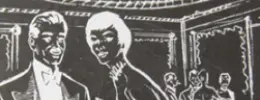
Interpretation panel: the Empire Theatre closed in 1955 (the starting point of the exhibition). Dance teacher, Molly Tanner (above) performed in the last ever show
1955–1985 – a web of places and people connecting Swindon's performing arts scene
Community engagement
Understanding audiences and audience segmentation pitches placemaking outputs to the right audience
Multi-voice narratives and inclusion, including multi-lingual and accessible options / collaborative working